
Bag-making machines are available in various configurations, depending on the type of bag to be produced. The machine creates a bag by feeding a roll of plastic film through a strip of film.
A series of processes are carried out, such as (heat) sealing, cutting, and stacking. Typical products include garbage bags, vest carrier bags, shopping bags, and drawstring bags.
Bag-making machines naturally generate a lot of static electricity. Due to the machine's design, the rollers create friction between the roller material and the passing plastic film.
This friction creates electrostatic charges on the surface of the material (bag).
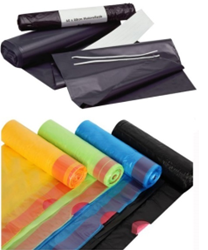
These electrostatic charges can cause the machine to run unevenly or result in unstable stacks, thereby reducing production yield and increasing the amount of scrap.
This type of problem occurs with most types of bag-making machines.
recognizable, such as Bags-on-Roll (Interleaf) and Bag-on-Bag.
Static discharge
To neutralize electrostatic charges on bag production machines, Simco-Ion offers a complete range of electrostatic discharge devices. The AC rods are frequently used. MEB, MaxION or the ½-inch super service rods (made of PTFE, attached to the welding unit). Additionally, 24V rods such as Performax IQ Easy (Speed), VicinION or ThunderION 2.0 IQ used. Both are long-range discharge rods, which eliminate the electrostatic charges that cause problems during stacking.
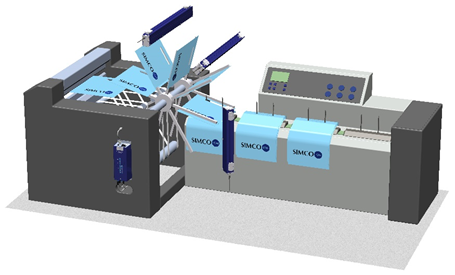
Note: Drawings and images do not depict the application exactly, but rather illustrate the situation and approximate reality.
generate charges
Static electricity, however, is not only a nuisance but can also be used to support a variety of processes. For example, it can be used to load a roll of garbage bags to prevent air pockets and other disruptions in the process, and to keep the roll compact. Adhering material to a metal roller without air pockets optimizes the cooling process. Loading the last bags of a roll secures the end of the roll and facilitates subsequent packaging in a carton.
In many processes, static charging is used to improve production control by charging the bottom and/or side fold of the material, or to assist with transport and stacking in the machine.
Perforation detection
The controlled generation of sparks is also used to detect perforations (pinholes) for
Quality assurance is used.
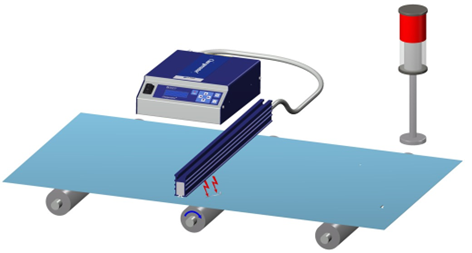
Note: Drawings and images do not depict the application exactly, but rather illustrate the situation and approximate reality.
Besides the fact that this can be an interesting solution for non-contact testing of product quality, it also offers the possibility of counting the number of perforations (even for biodegradable bags).
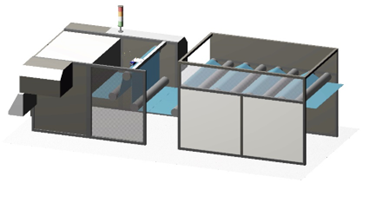
Note: Drawings and images do not depict the application exactly, but rather illustrate the situation and approximate reality.
This production technique is used by Simco-Ion high-voltage generators This enables applications specifically designed for these uses. For example, with a static high-voltage generator like the Simco CM5 generator or a Simco 24V Perfomaster The spark can be controlled and converted into a signal that is transmitted to the machine's PLC. This data informs the PLC so that the operator knows whether a product is defective, whether it is in the correct position, or how many products have been manufactured.
These Simco-Ion charging and discharging technologies therefore open up new avenues for efficient and
Competitive bag manufacturing!
Would you like to learn more about the effects of static electricity? Then please visit www.rhdgmbh.com/simco-ion or write to us Contact – (rhdgmbh.com) !