Manually stacking and wrapping cartons on pallets can be time-consuming and expensive due to the intensive labor required. For this reason, the process is often fully automated. Automated pallet wrapping lines come in a wide variety of designs, but they often share one common problem: issues with static electricity on the sides and/or the top film.
Stretch film unwinders are used to wrap a loaded pallet with stretch film. Stretch pallet wrapping is commonly used in the general food, chemical, and electronics industries. The pallets are wrapped with a highly elastic plastic film, typically made of linear low-density polyethylene (LLDPE). The film's elasticity keeps the products securely bound. Stretch film is used to wrap products on pallets and secure them to each other and to the pallet during transport and storage.
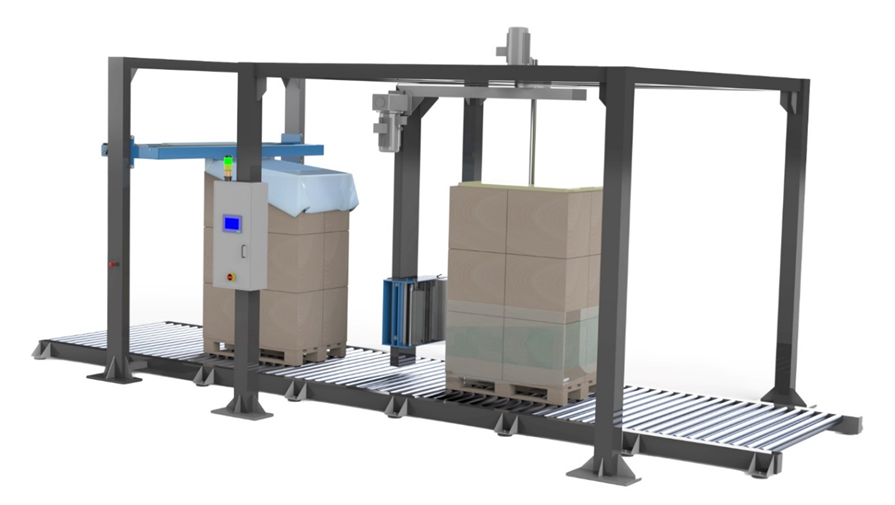
After palletizing, a top-loading film dispenser can apply a protective film to the products to shield them from environmental factors such as moisture and dust. Neutralizing static charges immediately after unwinding can prevent the protective film from sticking and ensuring complete coverage of the products.
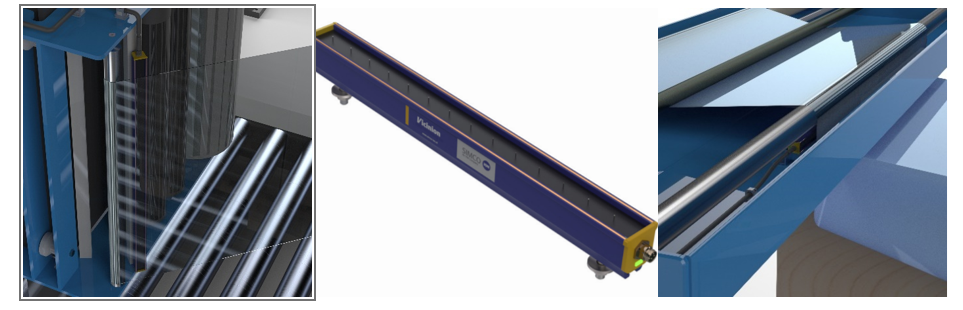
When wrapping a pallet with stretch film, static charges can cause electric shocks (discharges) to operators, electronic parts, or optical sensors, and attract dust to the film. An ultra-compact VicinION 24V discharge rod, which is mounted on the swivel arm, can neutralize the static charge after unwinding this stretch film.
The targeted use of electrostatics can help you solve specific static problems, leading to high-quality, competitive packaging production, including your packaging process and the reduction of electric shocks to your employees.
Would you like to learn more about the effects of static electricity? Then please visit www.rhdgmbh.com/simco-ion or write to us Contact – (rhdgmbh.com) ! Are you interested in more case studies and concrete examples? Download our Fbook „Electrostatics in Production: Basic Knowledge and 5 Concrete Applications“ "download" to expand your knowledge!