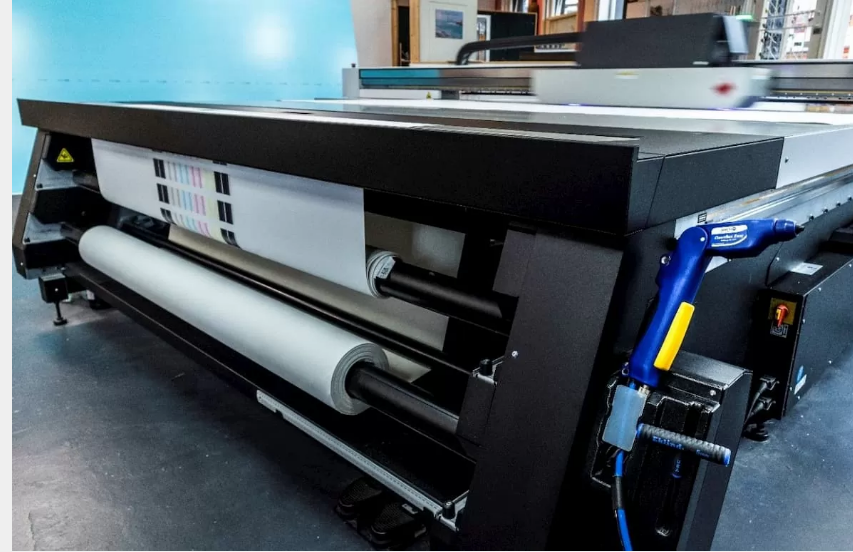
Digital flatbed UV printers can print in high quality on a wide variety of materials such as photo paper, film, fabric, plastic, PVC, acrylic, glass, ceramic, metal, wood, or leather. These printers can use special UV-curing inks that are exposed to UV light to cure.
A new Cleanflex easy 24V antistatic ion spray gun It can be used to neutralize electrostatic charges on the material before printing. High electrostatic charges (measurable with a static electricity meter) Simco ion meter FMX-004These problems occur, for example, when protective films are removed from plastic sheets.
Neutralizing the surface prevents the attraction of dust particles and simplifies placement on the vacuum table.
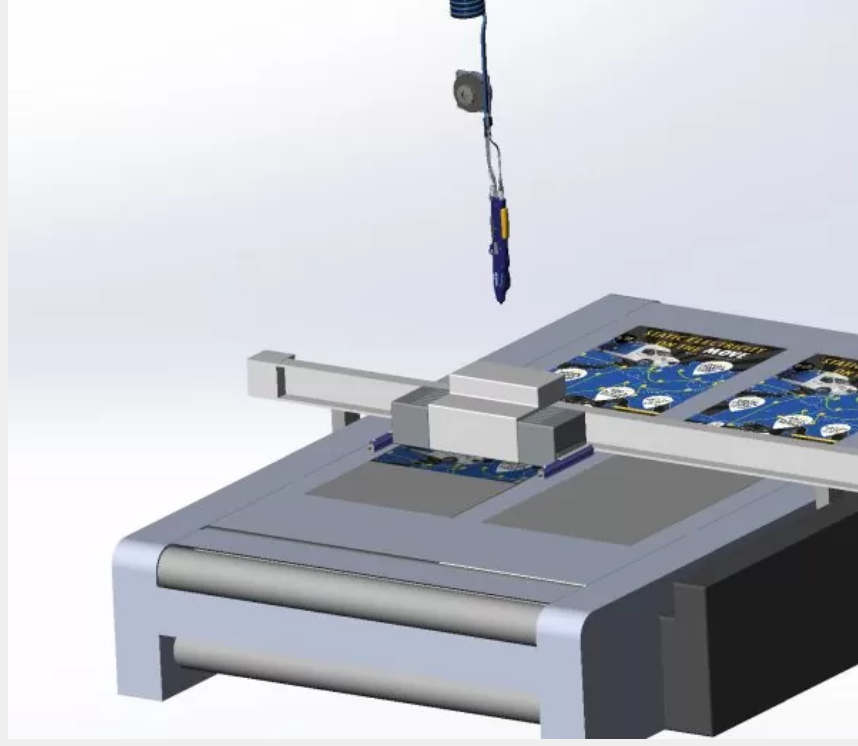
An industrial ion spray gun can be used to clean the material before printing. The vertical suspension on a spring mechanism makes it easier to use.
Simco-Ion recommends neutralizing the material in free air, not while it is lying on the (vacuum) table of the flatbed printer. When a charged sheet is in free air, the electric field acts in all directions and can be measured and neutralized. However, when the sheet lies flat on a (conductive) table, the electric field is influenced by the table and cannot be measured or neutralized.
By positioning compact 24V discharge units Simco-Ion technology on both sides of the printhead ensures that static electricity buildup is avoided during printing. This prevents blurry print results. Printhead contamination is also reduced, leading to longer production runs.
Most digital UV flatbed printers have a roll-to-roll option for printing on flexible media rolls. By positioning static discharge units Electrostatic charges are also eliminated at the printhead when printing these materials.
For some materials, it may be necessary to neutralize the flexible material directly during unwinding and winding.
Simco-Ion can help you solve your specific static problems to achieve competitive, high-quality digital flatbed printing.
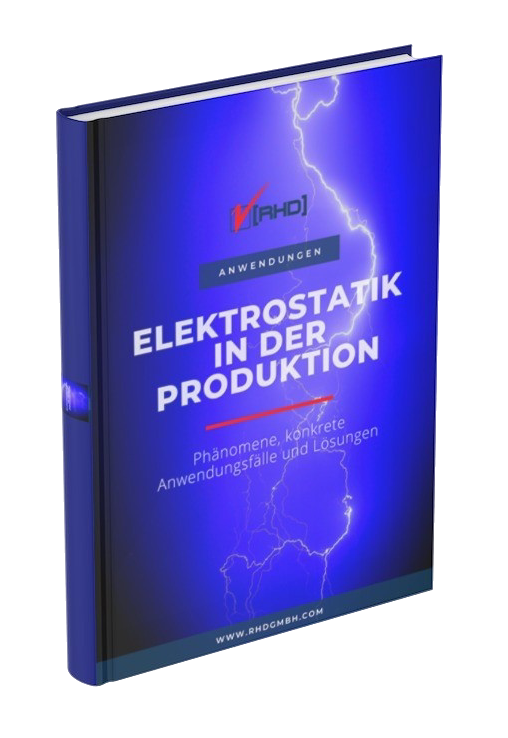
Would you like to learn more about the effects of static electricity? Then please visit www.rhdgmbh.com/simco-ion or write to us Contact – (rhdgmbh.com) ! Are you interested in more case studies and concrete examples? Download our Fbook „Electrostatics in Production: Basic Knowledge and 5 Concrete Applications“ "download" to expand your knowledge!