WHAT IS STATIC ELECTRICITY?
Static electricity is an electrical charge that does not move. Static electricity is generated when two or more surfaces come into contact and then separate. Static electricity can cause problems in many production processes that use non-conductive materials such as plastic, paper, wood, and textiles. One common problem when static electricity is generated is that people can receive electric shocks. This page provides information and solutions to prevent people from receiving electric shocks during the production process.
THE PROBLEM
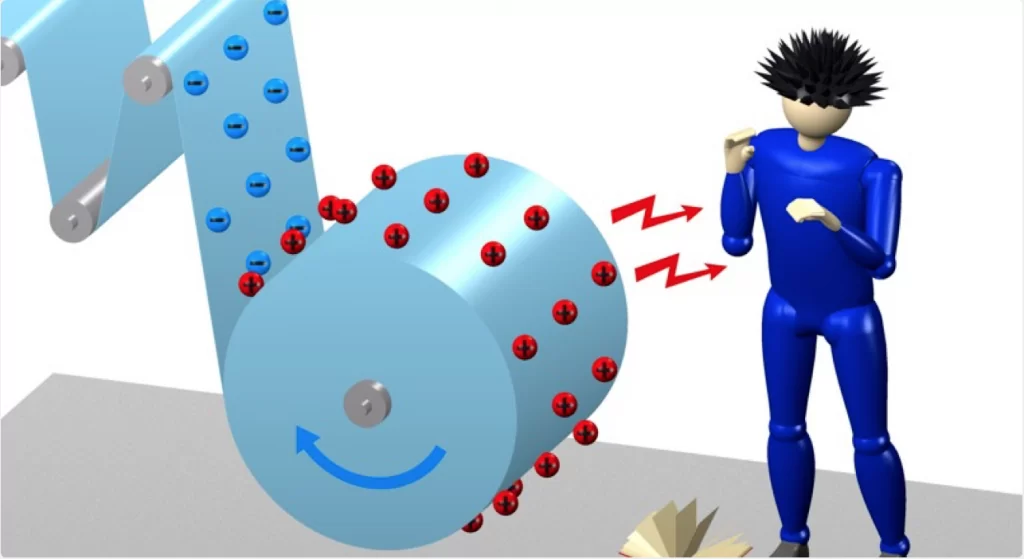
A very common problem is that people receive electric shocks while working near objects with a high electrostatic charge. Problems arise when machine operators come close to highly charged materials, such as film on a roll in a winding or unwinding area. A direct spark can jump from the object to the person, which is unpleasant and sometimes dangerous. The person can also become charged simply by being near the charged object. A spark is generated when the person comes near a grounded metal surface or another person.
THE SOLUTION
In both cases, the solution is not person-related. The solution to prevent static shocks is to prevent the buildup of a high static charge on the object. Static charges should be reduced by installing antistatic devices in the final stage of the process, where the person receives a shock or becomes charged. In most cases, this will solve the problem. Occasionally, the charge is so high that the object needs to be discharged at other points in the production process. The antistatic equipment in the final stage then reduces the remaining charge to a safe level. Products used for this application: ThunderION IQ from Simco-ION

THIS IS WHAT THE WORKERS' ASSOCIATION SAYS ON THE SUBJECT OF ELECTROSTATICS
The German Social Accident Insurance (DGUV) emphasizes the importance of electrostatics in industrial processes and the associated hazards. Electrostatic charges can arise from friction, separation, or contact between materials and lead to unwanted discharges. Such discharges can not only damage sensitive electronic components but also act as ignition sources in potentially explosive atmospheres. Furthermore, they can cause unpleasant electric shocks for employees, which, while rarely resulting in direct injury, can trigger pain and startle reactions.
To minimize these risks, the BGs recommend various measures:
- Grounding and equipotential bondingEnsure that all conductive parts of equipment and machinery are properly grounded to guarantee the safe dissipation of electrostatic charges.
- Use of conductive materials: Use of materials with conductive or antistatic properties, especially in personal protective equipment (PPE) such as footwear, to prevent the charging of people.
- Control of environmental conditionsMaintaining adequate humidity, as dry air promotes the formation of electrostatic charges.
- Training and awarenessRegular instruction of employees about the dangers of electrostatics and the importance of preventive measures.
The BG RCI has compiled comprehensive information and answers to frequently asked questions on the topic of electrostatics.
It is crucial that companies recognize the potential dangers posed by electrostatic charges and implement appropriate protective measures to ensure the safety of employees and the trouble-free operation of the equipment.
Would you like to learn more about the effects of static electricity? Then please visit www.rhdgmbh.com/simco-ion or write to us Contact – (rhdgmbh.com) ! Are you interested in more case studies and concrete examples? Download our Fbook „Electrostatics in Production: Basic Knowledge and 5 Concrete Applications“ "download" to expand your knowledge!