Do you process plastics in your production? Then this new SIMCO case study from real-world experience will certainly be of interest to you! Due to strong electrostatic charging, plastic threads, plastic-based textiles, or even plastic tubing can repel, attract, or inflate each other during the manufacturing process, and may even adhere to machine parts. This can lead to production bottlenecks and unnecessary errors.
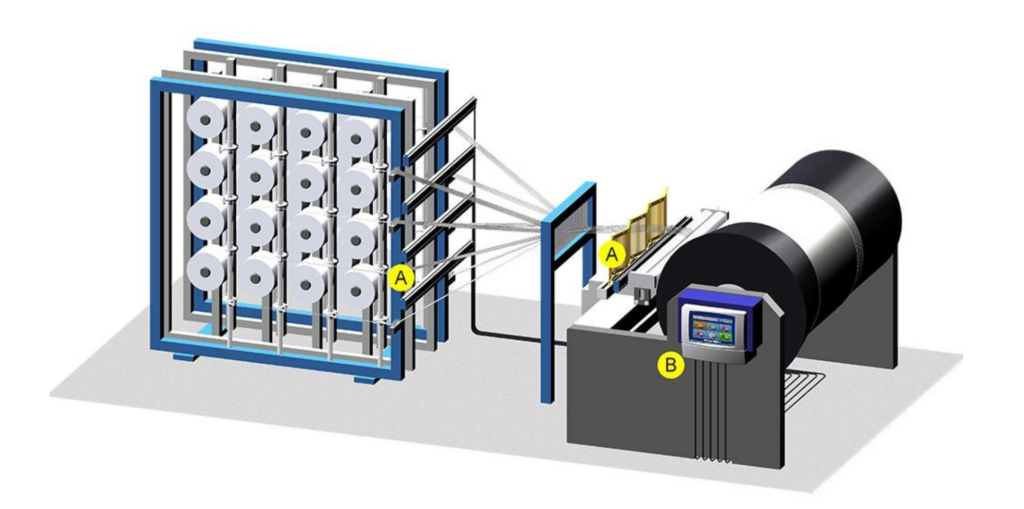
Particularly with creel or beam winding machines, it is frequently observed that the filaments become heavily charged during unwinding. This results in a very uneven winding pattern, and the filaments tend to stick to machine parts. The charge is further increased when passing through the creel.
We also frequently observe this charging of plastic wires in the production of tires in the automotive industry. For example, if the steel wires incorporated into tires are replaced by plastic wires, the wires become highly charged, which can lead to strong electrical discharges during further tire production.
This can be due to the following phenomenon: The filaments emerging from the extrusion die repel each other because they are electrostatically charged. This makes further processing (stretching, twisting, or winding) more difficult, as the filaments "drift out of alignment".
By installing SIMCO ionization bars, as shown in the image below, e.g. the Performax IQ Easy in the correct positions, these disturbances can be completely eliminated – even at very high web speeds.
Would you like to learn more about the phenomenon of electrostatics?
DOWNLOAD OUR eBook FOR FREE NOW!
Subscribe to our free newsletter to receive our ebook "Electrostatics in Production," where we present easily understandable basic knowledge of electrostatics, along with five concrete applications and efficient practical solutions. Sign up for our regular ePublications and gain a real knowledge advantage!